

 We've prepared a special "witch's brew" of Halloween tricks & treats for you to savor. So enjoy!
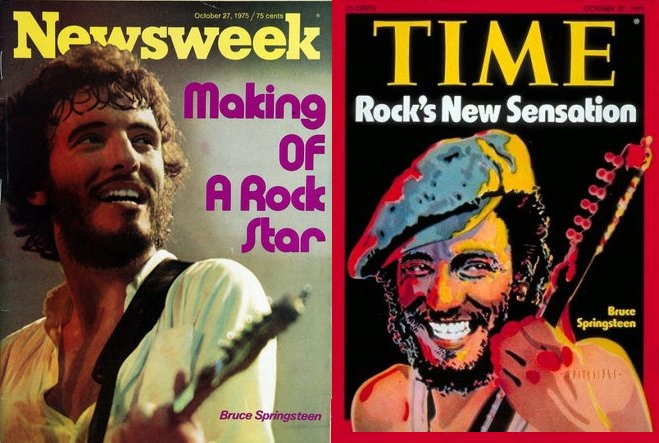 1975: With the release of Born to Run, his third album, Bruce Springsteen finally moved from critics’ darling to mainstream rock stardom. That effort received a considerable boost on this day, when the pride of the Jersey shore landed on the covers of both Time and Newsweek.
  We're all about the history of rock & roll at BoomtownAmerica.com!
Every week, we present “ROCK REMEMBERED,” a deep dive into the hidden history of rock & roll, the stories behind the artists and songs that changed the world. Join host “Boomtown Bill” Cross each Wednesday at 7 pm (Eastern) with an encore broadcast on Saturday at noon (Eastern).
Join us this Wednesday as we play "Halloween's Greatest Hits!"

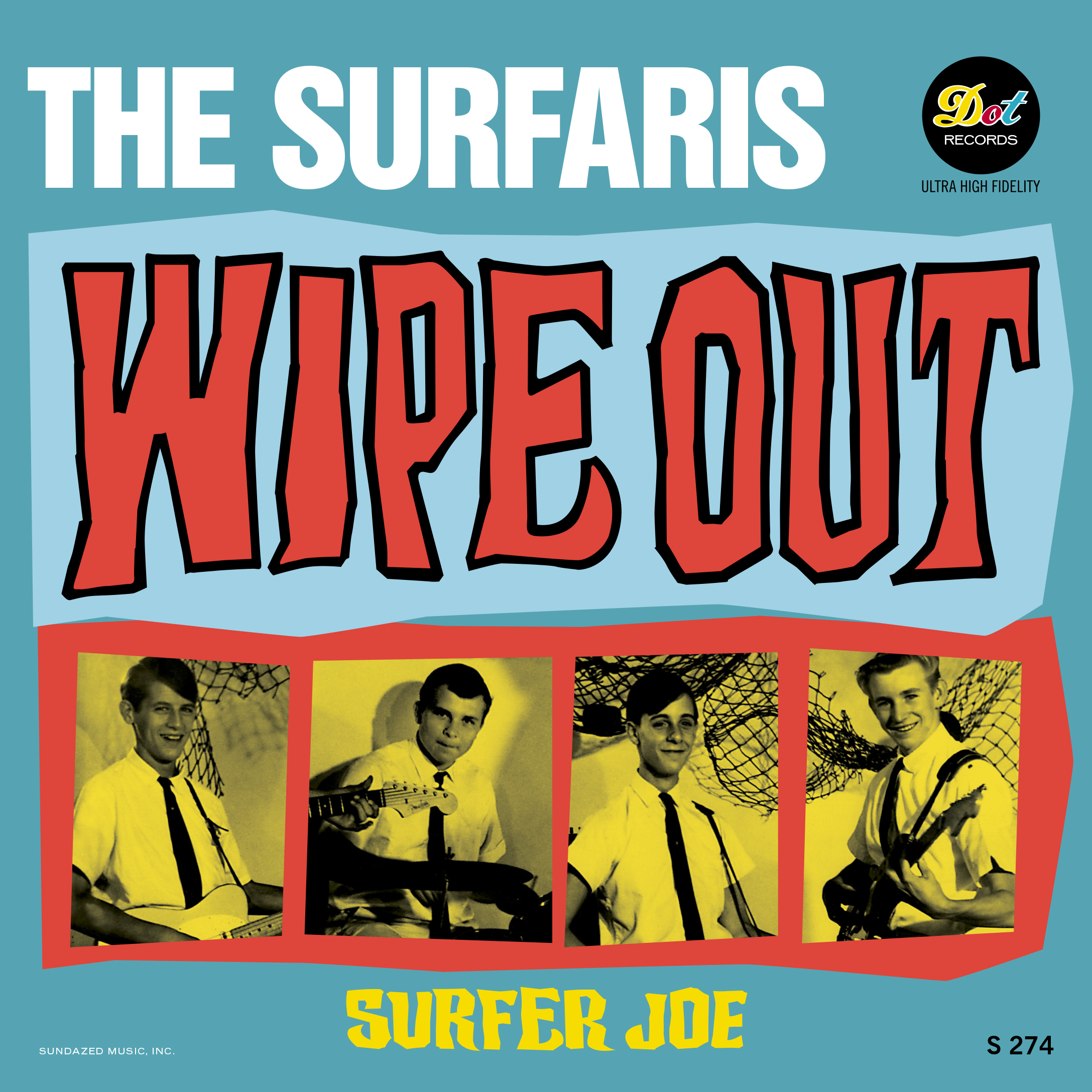 One of the most iconic of all surf instrumentals, “Wipe Out” by the Safaris, almost never came to be.
The song was composed and recorded on the spot when the band was in the Pal Recording studio in Cucamonga, California. The lads thought their first big smash would be “Surfer Joe,” but they needed something for the single’s B-side.
The band members, Bob Berryhill, Pat Connolly, Jim Fuller and Ron Wilson, launched into an enthusiastic bit of a jam, keyed by Wilson’s energetic drum solo. In keeping with the surf theme of the A-side, the boys christened the tune “Wipe Out” after the term surfers used when one of their own fell off their board in an often-painful way.
For a finishing touch, the band added a sound effect they thought sounded like a surfboard breaking up as well as a maniacal laugh and the expression “wipe out” voiced by the group’s manager, Dale Smallin.
To the Safaris’ surprise, “Surfer Joe” failed to get much airplay. But their throwaway instrumental proved to be a different story. Although the single was released by the tiny DFS label, it attracted the attention of Dot Records, a national label. They bought the rights to the single and released it in the summer of 1963. By fall, it had climbed all the way to #2 on the charts, selling well over a million copies. Even more amazing, the song returned to the Top 20 just 3 years later, reaching #16 in 1966.
It sold still more copies when it was featured on the soundtrack of the 1987 film Dirty Dancing.
Unfortunately, the band was never able to duplicate their initial success. They released only 4 other singles and were soon “gone with the wave.”
But for Baby Boomers, there was once only one true test of a great drummer – could he play the drum solo from “Wipe Out?”
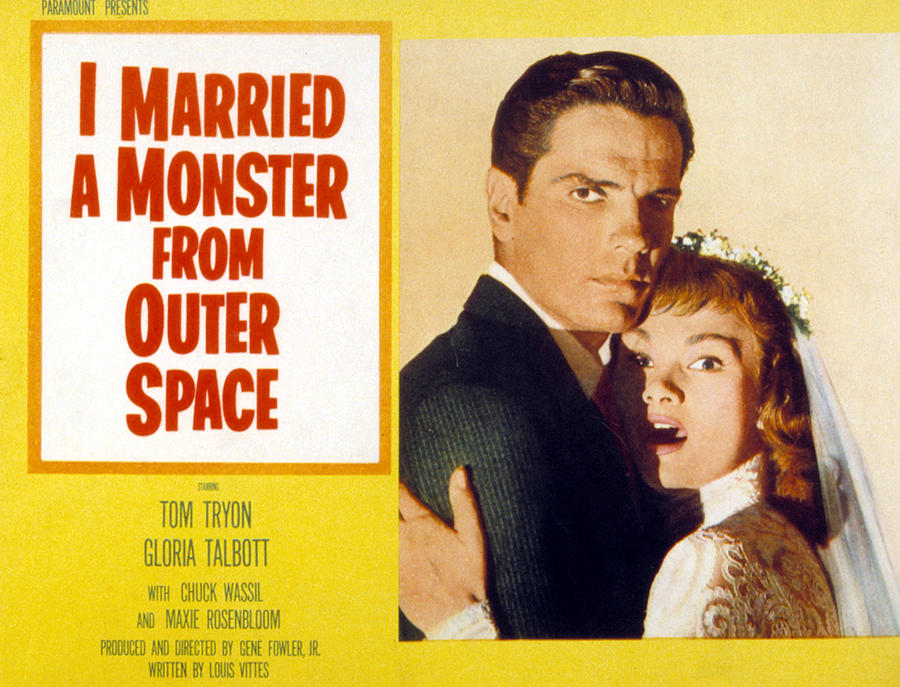
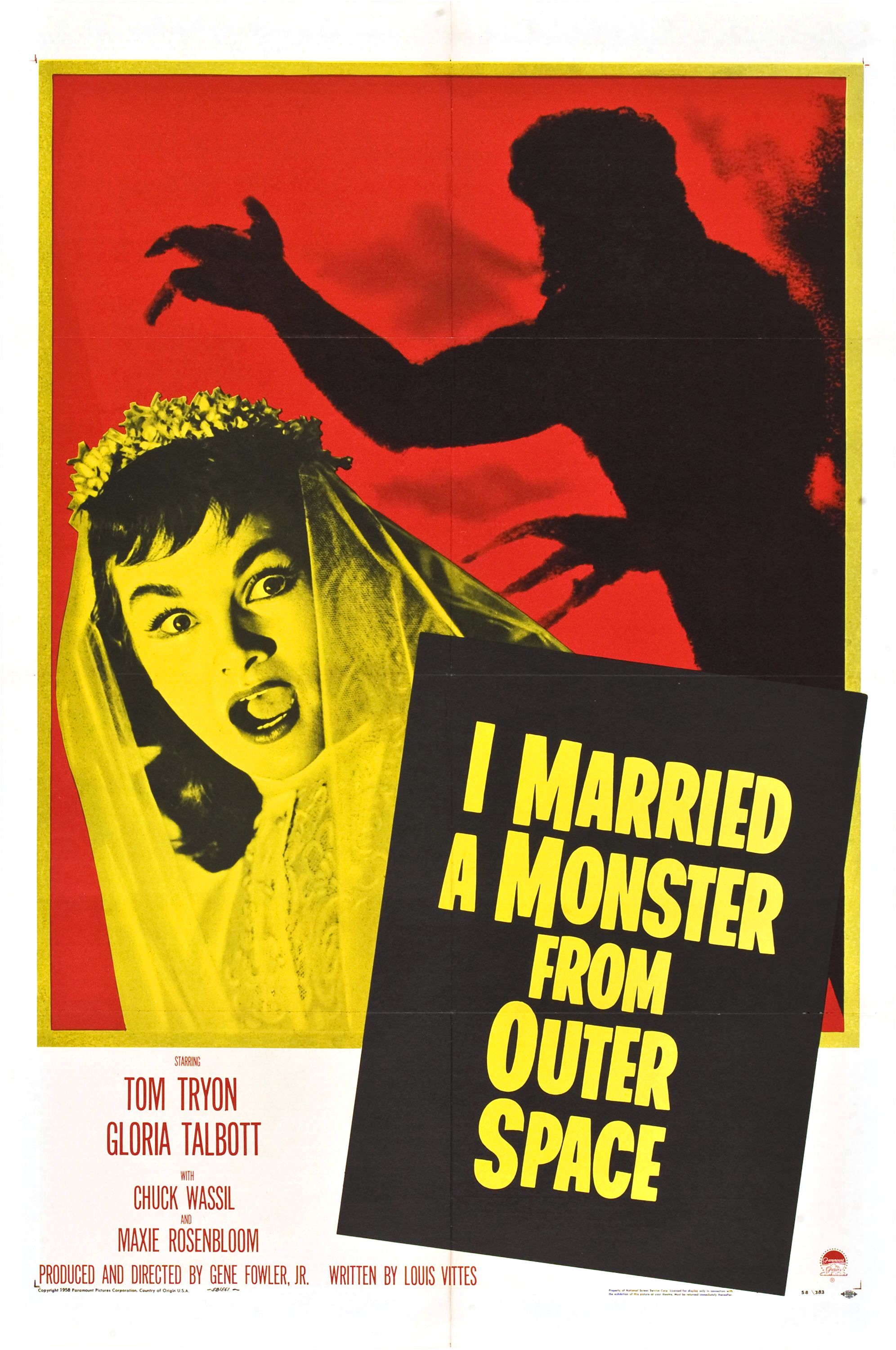 Just like I Walked with a Zombie, behind the incredibly silly title lurks a pretty decent little B-movie.
I Married a Monster from Outer Space was made by Paramount Pictures in 1958. Directed by Gene Fowler and written by Louis Vittes, it involves a young suburban bride (Gloria Talbot) who comes to suspect that her husband (Tom Tryon) has somehow changed since their recent marriage. She is wrong on that account. Her husband hasn’t changed, he’s been totally replaced by the afore-mentioned monster. So have several other husbands in her neighborhood.
Yes, the plot seems like a blatant rip-off of the oft-remade sci-fi classic, Invasion of the Body Snatchers, but the acting, script and production values (particularly how lightning can reveal parts of the monster’s true visage) are very well done.

Obviously intended for the drive-ins that were so popular at the time, I Married a Monster from Outer Space was actually part of a double feature Paramount put together. The “second great co-hit” was a little film that was a lot sillier but has fared a lot better in people’s memories – The Blob!
I Married a Monster from Outer Space is available on DVD and from several online streaming services. Trust us, it’s worth a look. And keep watching the skies!
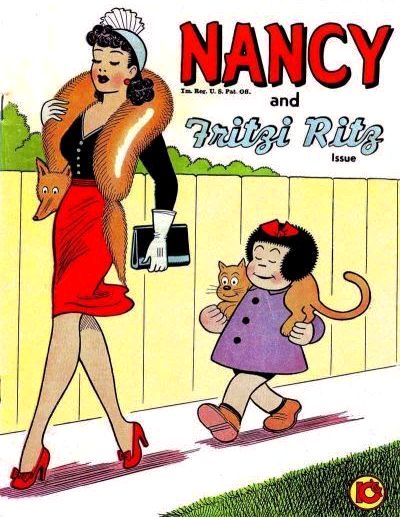 We all grew up thinking of Fritzi Ritz as Nancy’s sensible, respectable guardian, but she had a secret past!
Francine “Fritzi” Ritz started out as a showgirl who not only took off her clothes to entertain newspaper readers, she also was something of a public exhibitionist as these long lost newspaper clippings prove.
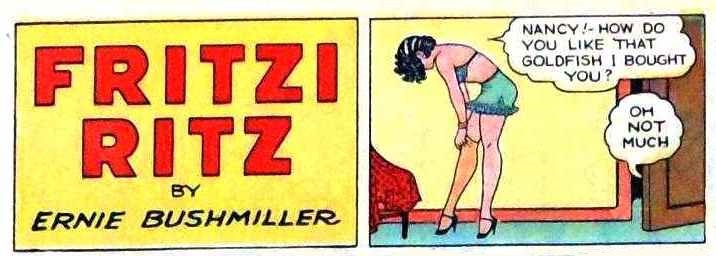
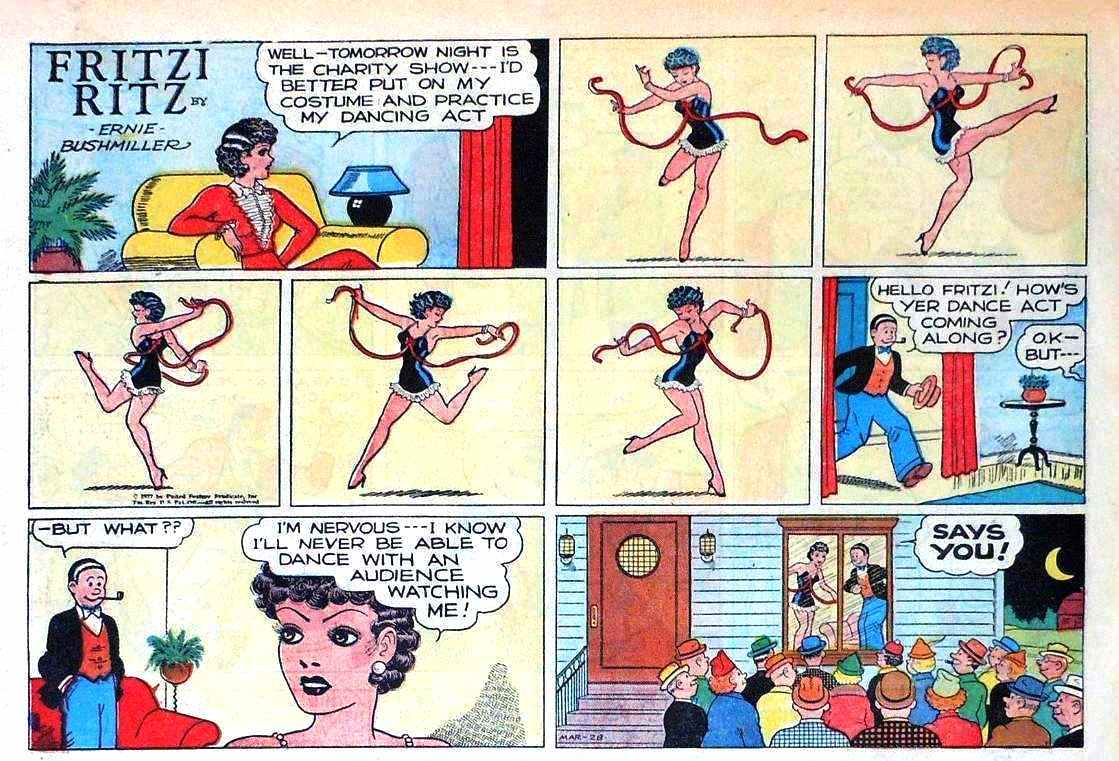
Contacted at the Home for Retired Comic Strip Actors, Ms. Ritz explained: “I’m not proud of what I did, but I’m not ashamed either. I needed the money.”
 As we get older, sadly, we can’t eat like we once did and heartburn may become a problem, particularly during the nighttime hours.
The experts say these foods can be part of the problem:
- Caffeine
- Citrus
- Chocolate
- Tomatoes
- Spicy Foods
- Fatty Foods
- Alcohol
- Spearmint or Peppermint (Who knew?)
The first rule in relieving the discomfort is: don’t go to bed on a full stomach!
Other things that might help:
- Lose weight (which eases the pressure on your stomach)
- Elevate your head – if you can, your head should be about 6 to 8 inched above your body to help prevent reflux
- Minimize your meals – Try eating smaller portions more frequently
- If you smoke, stop – tobacco smoke can weaken the gateway between your stomach and esophagus.