

 The history of made-for-TV cartoons is not a particularly glorious one. The overriding concept from the beginning has been to see how cheaply they can be made, not how entertaining or artistic they can be.
The man to blame or praise is a guy named Alex Anderson. In the late forties, he was toiling away at the Terrytoons cartoon studio in New York. He could see that the days of theatrical cartoons (their home since the birth of movies around the turn of the last century). He had an idea that the future of animation lay with that new medium, television.
Alex went to his boss, Paul Terry, who was also his uncle, with a way to make cartoons on the cheap and sell them to the new local TV stations that were starting to pop up around the country. Uncle Paul liked the idea, but at the time, the output of the Terrytoons studio was distributed to theaters by 20th Century Fox. In those days, the movie studios considered television to be Public Enemy #1. If they caught Terry selling cartoons to TV, they would end his distribution deal, effectively shutting down his studio.
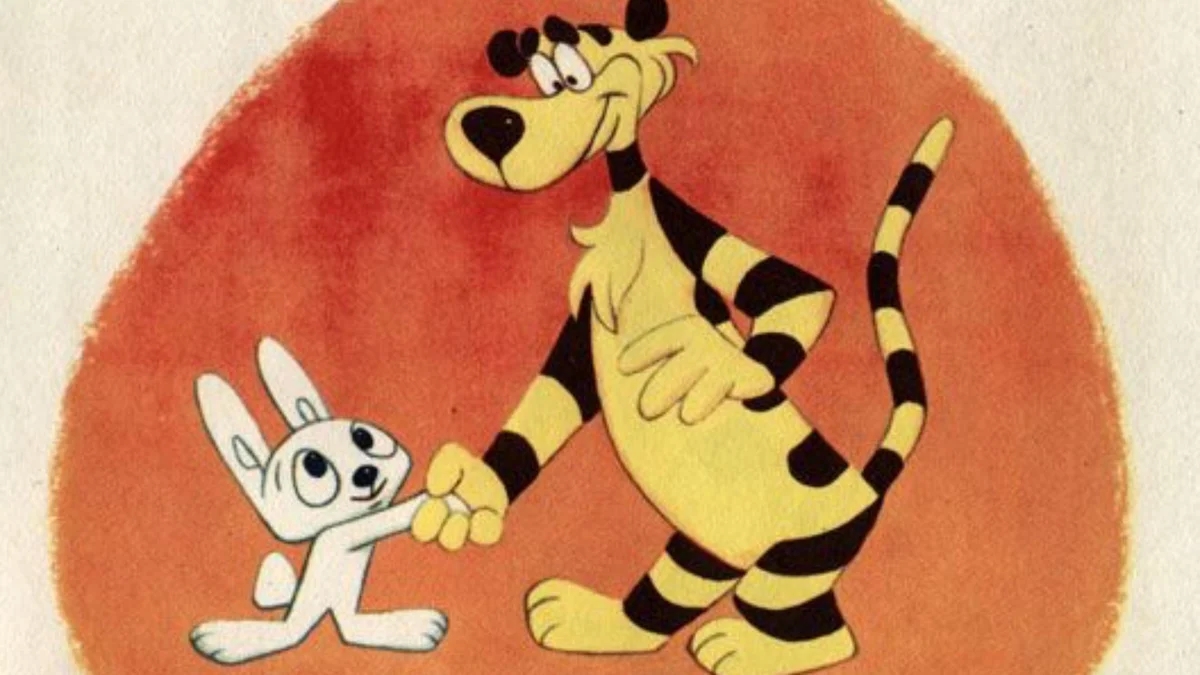
But Uncle Paul did let Alex use some of the people at the studio to help him put together a pilot film. Alex’s first idea was to make the hero of his cartoon series a donkey, but Terrytoons model designer Artie Bartsch didn’t think donkeys lent themselves well to cartoons and instead suggested a rabbit, a small, plucky rabbit.
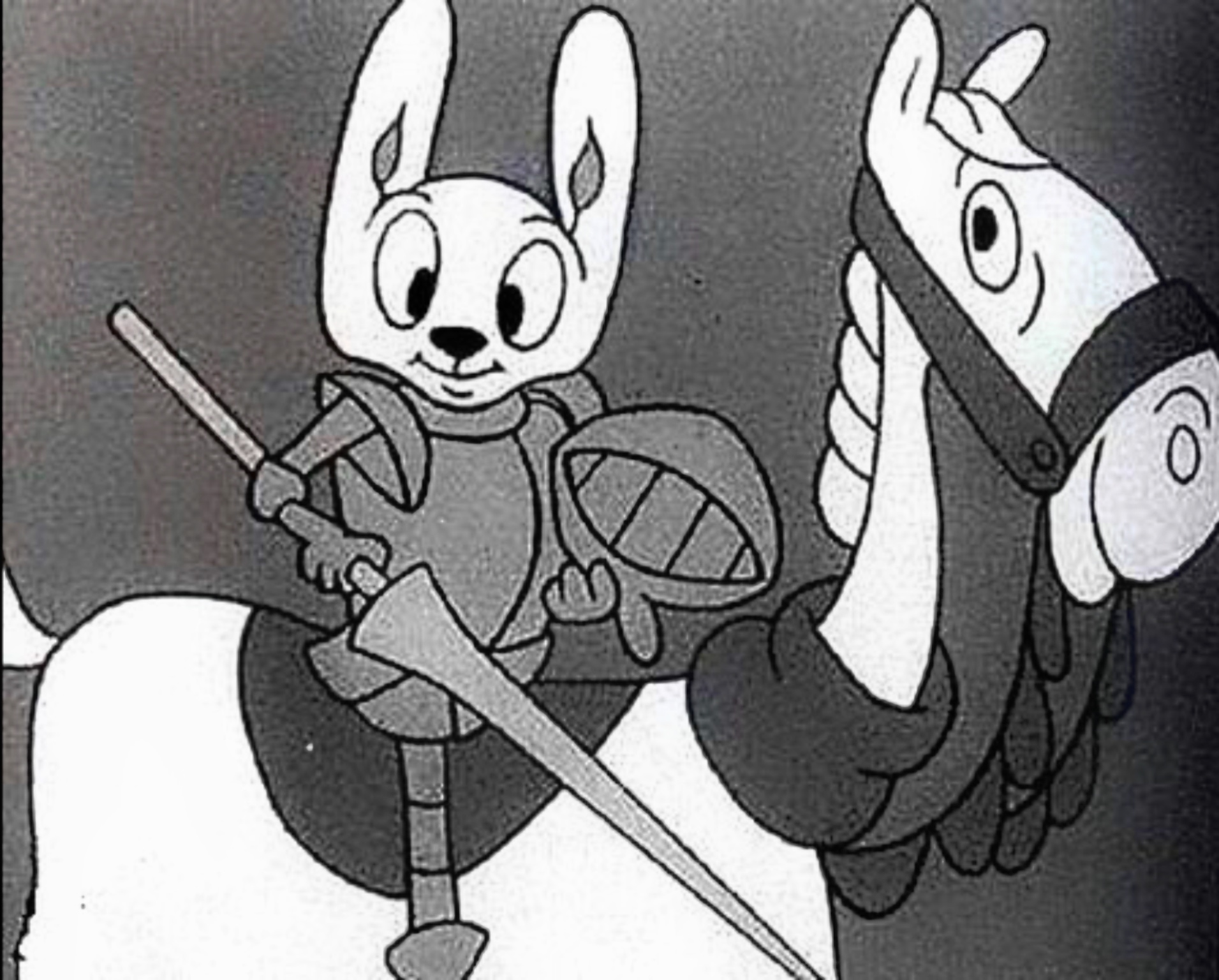 Anderson then had the idea to pair the rabbit with a bigger sidekick, a tiger. But to help with the comedy, he would switch the traits of the animals, making the rabbit brave and fierce and the tiger cowardly and dumb.
Anderson then needed financial backing, so he teamed up with a guy he’d known since childhood, a California real estate agent with a truly bent sense of humor named Jay Ward. Together, they formed Television Arts Production. Ward also suggested the names Crusader for the rabbit and Rags for the tiger (a play on a then-standard song “Tiger Rag”).
They produced a pilot they called “Comic Strips for Television.” In that pilot, there were two other segments besides Crusader Rabbit. One of those segments featured a Canadian Mountie that Anderson had created, called Dudley Doright. Keep that name in mind.
 NBC initially liked the Cusader Rabbit segment and wanted to schedule it on the network. But they changed their mind after TAP went into production. So, Anderson brought on board another partner, Jerry Fairbanks, who actually came up with most of the financing for the project and who had extensive experience selling programs to the fledgling TV stations.
In those early days of TV, there were no reruns, and the Hollywood studios, as mentioned, were reluctant to sell any of their product to TV. In that marketplace, Crusader Rabbit was quickly gobbled up. But production took longer than they first anticipated. So, the project that had begun in 1949 didn’t reach America’s airwaves until September 1950.
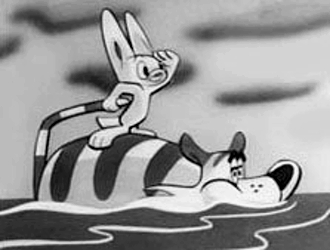
To say that Crusader Rabbit was crude is an understatement. The episodes were mostly still illustrations with little to no movement. The gags tended to come from the soundtrack. It was more like illustrated radio. Crusader and his pal lived in a forest village called Galahad Glen, and they got involved in adventures that were called “crusades.” The first involved the pair traveling to Texas, where the state was attempting to wipe out all jackrabbits. Each black-and-white episode ran about 5 minutes and ended with some sort of cliffhanger, like the movie serials that were popular in the 1930s and early 40s.
Yes, the animation was almost non-existent, but Ward and Anderson filled the episodes with plenty of groan-inducing puns, like career criminals Sam Quentin and Al Catraz, and occasional jokes aimed at adults (who they wisely figured might be watching the TV with their kids).
With no competition, Crusader was seen in most markets. 195 five-minute episodes were cranked out from 1949 to 1951, with the reruns keeping the show on most stations well into the mid-1950s.
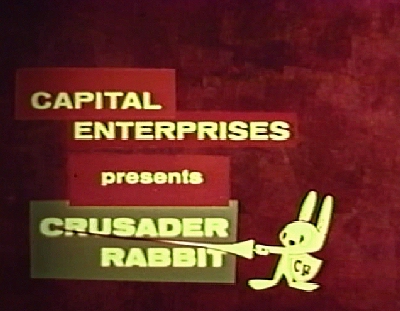 Anderson and Ward went their separate ways. Eventually, Television Arts Productions was acquired by what we would today call a venture capitalist named Shull Bonsall. Bonsall decided to revive Crusader, this time with better animation and color. He was able to bring back many of the people who had been involved with the first series, including several of the original voice actors.
Bonsall produced an additional 260 episodes, retaining the cliffhanger story structure. These new episodes debuted in the fall of 1958. They did well initially, but Bonsall now had some serious competition.
Former M-G-M animators William Hanna and Joe Barbera (creators of “Tom & Jerry”) had launched their own made-for-TV cartoon factory with the series “Huckleberry Hound,” and Jay Ward himself was back in the cartoon business with a new series he called “Rocky and His Friends.” The success of both those shows (Huck was syndicated and Rocky was on ABC every weekday afternoon) totally overshadowed Crusader. He soon retired to Galahad Glen, and his adventures quickly faded from America’s TV screens.
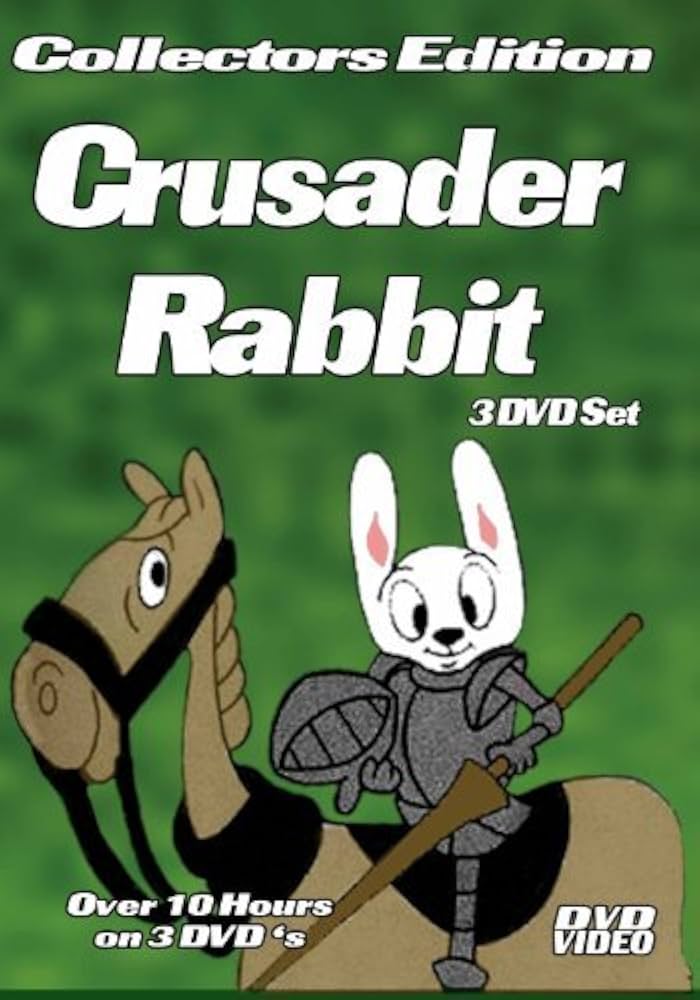 Alex Anderson has since been acknowledged for creating not only Crusader and Rags, but also Rocky and Bullwinkle and Dudley Do-Right, which he graciously allowed his old pal Jay Ward to take to TV immortality (and a theme park attraction at Universal’s Islands of Adventure).
A small handful of Crusader Rabbit’s adventures from its initial run and the color series have popped up on home video from time to time, but the current owner of the series, Paramount, has no interest in making any of the plucky rabbit’s crusades available any time soon. Your best bet would be to track down some of the older DVDS at a thrift store or auction site like eBay.